
Short answer
If you are new to pranayama, start with gentle nasal breathing techniques that help you notice and regulate the breath rather than push it. For most beginners, that means short sessions, soft exhales, and little or no breath retention at first.
Good beginner starting points include diaphragmatic breathing, simple equal breathing, alternate nostril breathing, gentle ujjayi, and bhramari. Stronger techniques such as kapalabhati or bhastrika are better added later, once the breath feels steady and familiar.
What pranayama means in practice
Pranayama is part of the broader yoga tradition, not just a generic synonym for taking a deep breath. NCCIH describes yoga as commonly including physical postures, breathing techniques, and meditation, and pranayama is the breathwork part of that system. For a beginner, the practical meaning is simpler: pranayama is a deliberate way of working with the breath so you can become calmer, steadier, more focused, or more prepared for meditation.
The important word there is deliberate. Pranayama is not about breathing harder. It is about noticing the breath, shaping it on purpose, and staying relaxed enough that the breath remains smooth. That is why beginners usually do best with gentle techniques instead of intense ones.
A lot of beginner guides make the practice sound more intimidating than it needs to be. You do not need long breath holds, complicated ratios, or a perfect yoga setup to begin. You need one manageable technique, a few quiet minutes, and enough patience to let the breath slow down gradually instead of forcing it.
Pranayama is broader than one single technique
Pranayama includes many different methods, from simple equal breathing to alternate nostril breathing to more forceful practices like kapalabhati. That variety is useful, but it also means beginners can choose badly if they assume the strongest-looking technique is the most effective one.
For a first practice, the best choice is usually the one that helps you feel more settled without strain. That often means slower nasal breathing, a comfortable exhale, and very little performance pressure.
Start with regulation, not intensity
Relaxation guidance from NCCIH points to slow, deep breathing, also called diaphragmatic breathing, as a common way to produce the body's relaxation response. That is a strong clue for beginners: the early goal is not advanced control. The early goal is learning how to breathe with less effort and more awareness.
Once that base is there, more specific pranayama techniques make more sense. Without that base, beginners often end up chasing ratios while their shoulders tighten and their face strains.
The best pranayama techniques for beginners
A beginner technique should be easy to repeat, easy to explain, and hard to overdo. If it takes so much effort that you cannot keep the jaw, throat, and shoulders relaxed, it is not a good first choice.
- Diaphragmatic breathing if you want the simplest possible starting point.
- Equal breathing if you want a clear rhythm without breath holds.
- Alternate nostril breathing if you want a calming, technique-based practice.
- Gentle ujjayi if you want a soft sensory anchor for focus or yoga.
- Bhramari if you want a longer, soothing exhale without a lot of counting.
Diaphragmatic breathing
Diaphragmatic breathing is not always labeled as pranayama in yoga settings, but it is one of the best entry points for pranayama beginners because it teaches efficient, lower-effort breathing. Cleveland Clinic explains that diaphragmatic breathing can help slow the breathing rate, reduce heart rate and blood pressure, and support relaxation. That makes it a practical foundation before you add more traditionally named techniques.
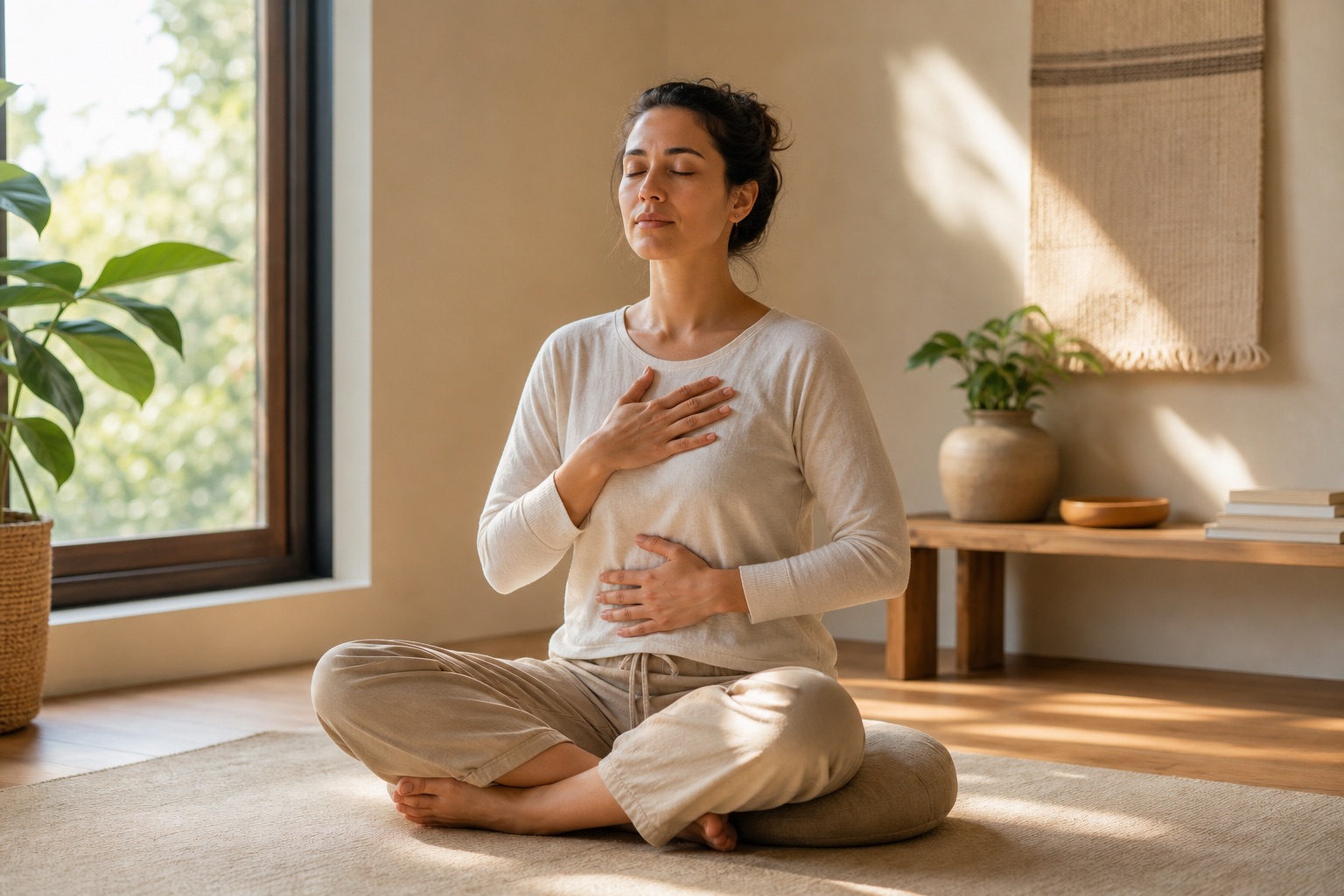
Lie down or sit comfortably, place one hand on the upper chest and one below the ribs, inhale slowly through the nose, and let the lower hand rise more than the upper one. Then exhale slowly without collapsing the chest. Even two or three minutes can be enough for a first session.
Equal breathing
Equal breathing is one of the simplest beginner pranayama patterns because the inhale and exhale use the same count. Try a gentle four-count inhale and a gentle four-count exhale. If four feels too long, shorten it to three.
The value of equal breathing is not complexity. It is consistency. The mind gets a clear rhythm to follow, and the body gets repetition without the added pressure of retention.
Alternate nostril breathing
Alternate nostril breathing, or nadi shodhana, is often one of the best true pranayama techniques for beginners because it is structured, calming, and easy to adapt. The finger pattern gives attention a job, which can make it easier than silent breath awareness for a restless mind.
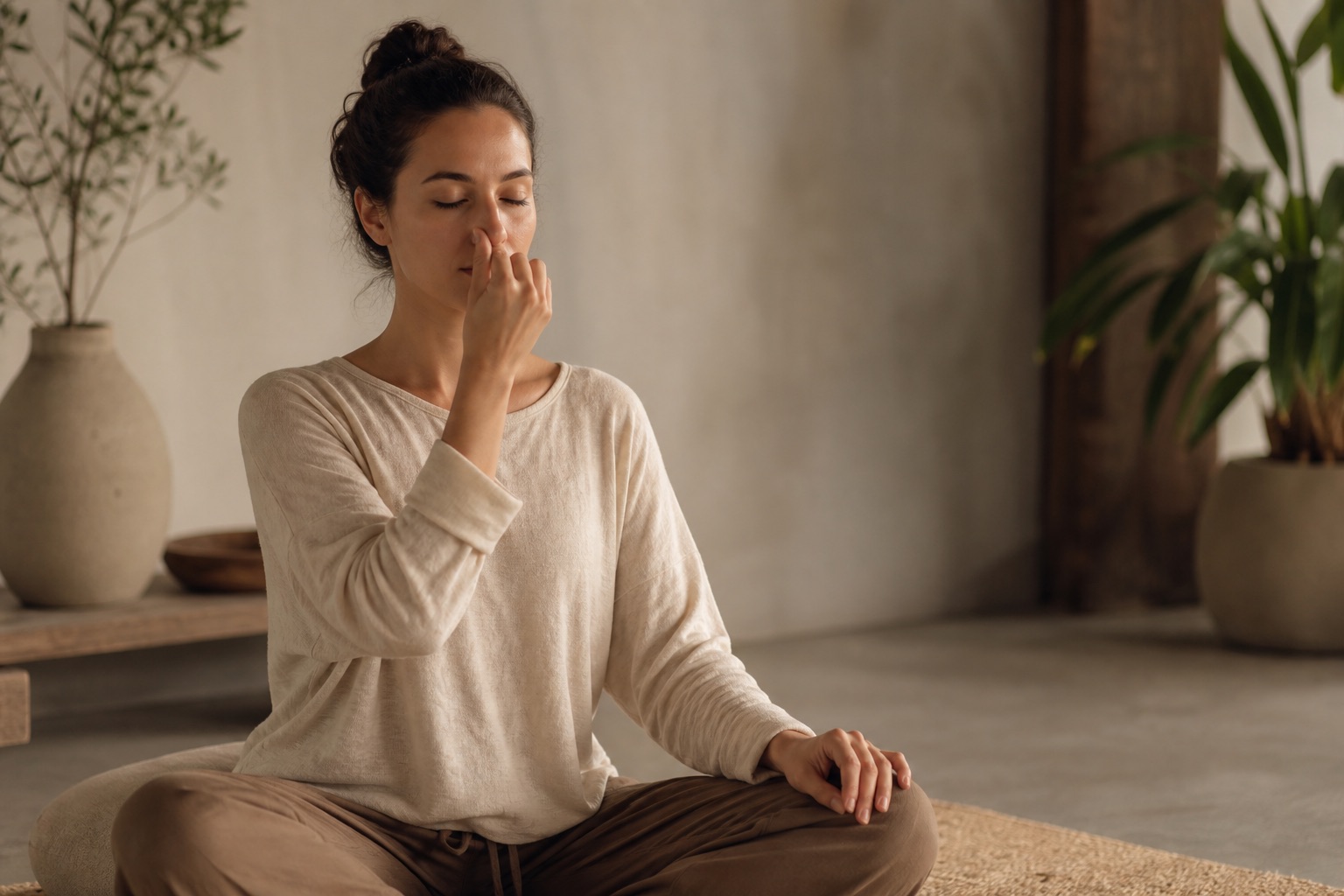
If that approach interests you, the alternate nostril breathing guide gives a full walkthrough. As a beginner, keep the practice slow and skip retention until the sequence feels natural.
Gentle ujjayi and bhramari
Gentle ujjayi and bhramari are useful when counting feels too mental. Ujjayi gives you a soft throat-based sound that can anchor attention, while bhramari gives you a humming exhale that many people find immediately soothing.
Use the ujjayi breathing guide if you want a steady focus-oriented practice, or the bhramari breathing guide if you want a softer exhale-led option for winding down.
Common beginner mistakes and safety rules
The most common beginner mistake is trying to control the breath before learning how to relax with it. The second most common mistake is choosing a stimulating technique because it seems more impressive or more advanced.
Practice seated comfortably or lying down, breathe through the nose unless a technique clearly says otherwise, and keep the breath smooth enough that the face stays soft. If you feel dizziness, chest pain, air hunger, or rising panic, stop and return to normal breathing.
- Start with three to five minutes, not a long session.
- Use a count that feels easy enough to keep the jaw and throat relaxed.
- Skip long holds until gentle breathing feels steady on ordinary days.
- Practice before stress spikes if your goal is calm, not only after you feel overwhelmed.
- Save stronger techniques for later, after you understand your baseline response.
Who should be more cautious
If you are pregnant, managing uncontrolled high blood pressure, severe anxiety, asthma flare-ups, COPD, heart concerns, or any condition that makes breathing uncomfortable, gentler practices are a better starting point than stimulating pranayama.
That does not mean you cannot practice. It means you should start with lower-intensity methods such as diaphragmatic breathing and use medical guidance when needed. Cleveland Clinic specifically notes that diaphragmatic breathing can be helpful for anxiety, stress, asthma, and COPD, while also noting that it should support, not replace, other care.
Why forceful techniques can wait
Forceful pranayama can be useful in the right context, but it is easier to misuse. Techniques like kapalabhati and bhastrika create more internal pressure and stimulation, which is the opposite of what most beginners need while learning breath awareness.
You are usually better off learning a stable base first, then adding stimulating techniques later if they actually fit your goal. If you are curious, the kapalabhati guide explains where that line is.
A simple first-week pranayama routine
The best beginner routine is small enough that you will actually repeat it. A first week of pranayama does not need variety for its own sake. It needs repetition, enough calm to notice how the breath changes, and enough flexibility that you do not turn practice into a test.
- Days 1 to 2: diaphragmatic breathing for three to five minutes.
- Days 3 to 4: equal breathing for three to five minutes.
- Days 5 to 6: alternate nostril breathing or bhramari for a few gentle rounds.
- Day 7: repeat the technique that felt easiest to return to.
If one method feels immediately more natural, stay with it longer instead of rushing to the next one. The point of the first week is not to sample everything. The point is to discover which pattern helps you feel more regulated and more willing to come back tomorrow.
Many beginners also benefit from practicing at the same time each day. A two-minute morning routine, a short reset before work, or a brief evening wind-down is more valuable than a perfect but inconsistent plan.
What progress actually looks like
Progress in pranayama is not proving that you can hold the breath longer. Early progress usually looks quieter than that: less rush, less strain, a smoother exhale, better awareness of when you are forcing, and more confidence about which technique fits your state.
If you want help deciding how practice frequency should grow from there, the guide on how often to practice pranayama gives a realistic progression instead of an all-or-nothing schedule.
Good next steps for a beginner
Once one gentle technique feels familiar, build outward based on your goal rather than trying to master everything at once.
- Alternate Nostril Breathing Guide
A strong next step if you want a calming, balanced beginner practice.
- Ujjayi Breathing Guide
A good fit if you want a gentle focus anchor or a practice to pair with yoga.
- Bhramari Breathing Guide
A softer option for winding down and lengthening the exhale.
- Breathwork vs Pranayama
Helpful if you are still sorting out how yoga breathing differs from broader breathwork language.
- Best Pranayama App
Useful if you want guided pacing and structure without building the routine on your own.
Where Prana fits
Beginners often do better with guidance that is calm and specific, not maximal. Prana fits best when you want clear pacing, short sessions, and a way to return to breathing practice without searching through a crowded app every time.
FAQ
What is the best pranayama for beginners?
Diaphragmatic breathing, equal breathing, alternate nostril breathing, gentle ujjayi, and bhramari are among the best beginner options because they are easier to regulate than forceful techniques.
How long should a beginner practice pranayama?
A few calm minutes is enough to start. Three to five minutes is often better than jumping into a long session that feels strained.
Should beginners do kapalabhati or bhastrika?
Usually not right away. Those techniques are more stimulating and easier to overdo, so gentler options are a better starting point.
Is pranayama different from deep breathing?
Usually yes. Deep breathing can be casual or therapeutic, while pranayama refers to more intentional breath regulation inside a yoga framework.
Should beginners hold the breath during pranayama?
Usually not at first. Beginners often do better with smooth inhales and exhales before adding retention.
Can pranayama help beginners feel calmer?
It can. Gentle slower breathing can support the body's relaxation response, but it should be practiced comfortably rather than forcefully.
What does it mean if pranayama makes me dizzy?
It usually means the technique is too forceful, too long, or not a good fit for that moment. Stop, return to normal breathing, and use a gentler pattern.
Can I learn pranayama from an app?
Yes, if the app keeps pacing clear, supports gentle technique choices, and does not push intensity too early.
Start with a calmer first practice
Prana gives beginners guided breathwork, clear pacing, and approachable technique options so pranayama feels easier to return to.
Download Prana