

Short answer
For guided pranayama, start by comparing Prana and Yogi Breath. Prana may fit an iPhone routine with named techniques, adjustable sessions, and optional Apple Watch practice; Yogi Breath may fit readers who want a structured technique library organized into levels. For a breathing ratio you already know, compare iBreathe or Paced Breathing instead.
The best pranayama app depends on whether you need instruction, precise timing, or a broader class library. Breathwrk and Othership offer guided breathwork libraries; Calm, Headspace, and Open place breathing inside a wider wellness routine. Choose by your practice rather than the number of features.
Which pranayama app should you try first?
Use this shortlist to choose a category, then compare the details below. These are matches to different needs, not a ranking based on hands-on testing of every app.
| Your practice | Start by comparing | What to check |
|---|---|---|
| Learning named pranayama techniques | Prana and Yogi Breath | Look for instruction for your chosen technique, comfortable pacing, and a short beginner session. |
| Following a ratio you already know | iBreathe and Paced Breathing | Confirm separate inhale, exhale, and hold settings match the pattern you learned. |
| Starting a session on Apple Watch | Prana and Breathing Zone | Check the Watch app's actual exercises and controls; Apple Health logging alone does not mean Watch-started practice. |
| Following a guided breathwork class | Breathwrk and Othership | Try the voice, music, and session style before committing to a larger library. |
| Adding breathing to meditation or sleep content | Calm, Headspace, and Open | Consider the wider membership if you will also use its meditation, sleep, or movement content. |
If you are a beginner
Choose guidance that explains what to do, not just a countdown. For example, a breathing animation cannot teach which nostril to close during Alternate Nostril Breathing. Our pranayama beginner guide and Alternate Nostril app guide explain what to look for.
If you already practice
Check whether you can reproduce your familiar pattern without reconfiguring every session. Separate inhale, exhale, and hold controls matter more than a long list of presets. Our breathwork timer guide explains the timing controls to compare.
Which pranayama and breathwork apps may fit your routine?
The table groups apps by the kind of practice they are designed to support.
| App | Published product focus | May fit if |
|---|---|---|
| Prana | Guided named techniques, adjustable iPhone sessions, optional Apple Health logging, and standalone Apple Watch practice. | You want breathing practice rather than a broad catalog of sleep stories or meditation courses. |
| Breathwrk | A broad library of breathing exercises and classes, with Peloton ecosystem access. | You want varied goal-based sessions within a larger fitness and wellness membership. |
| Yogi Breath | A structured library of pranayama and breathing exercises organized into levels. | You want a more technique- and progression-oriented practice library. |
| Othership | Guided breathwork sessions with music and an immersive class format. | You prefer a sensory guided session to configuring a breathing ratio. |
| Wim Hof Method | The Wim Hof Method, including breathing exercises, cold exposure, and challenges. | You specifically want that method rather than a general pranayama library. |
| Breathing Zone | Paced breathing, adjustable rates, voice and visual guidance, and a dedicated Apple Watch experience. | You already know the pace you want and do not need a broad content library. |
| iBreathe | Custom breathing patterns, reminders, and Apple Health Mindful Minutes. | You want a lightweight tool for a familiar breathing pattern. |
| Breathe+ | Visual breathing guidance and adjustable exercise sessions. | Visual pacing is more useful to you than a large educational library. |
| Breath Ball | Breathing exercises built around slow breathing, with HRV reporting described by its developer. | You are interested in a breathing guide with the developer's HRV-oriented approach. |
| Paced Breathing | Fine control over inhale, hold, exhale, and rest timing, with optional heart monitoring. | You already know the ratio you want to practice and want precise timing controls. |
| The Breathing App | Resonance breathing, named patterns, custom ratios, and sound-led guidance. | You want pacing you can follow by sound as well as a repeatable breathing pattern. |
| Calm | Breathing exercises inside a larger sleep, relaxation, and meditation library. | You also expect to use its sleep and meditation content. |
| Headspace | Mindfulness, sleep, and guided breathwork content in one service. | You want breathing as one part of a broader mindfulness routine. |
| Open | Breathwork, meditation, movement, and studio-style classes. | You want a class-based wellness service rather than a timer-first tool. |
How do the main app categories differ?
The same word, breathwork, can describe a short timer session, a guided class, or a part of a broader sleep and meditation service. Start with the type of practice you want to return to.
Dedicated pranayama and technique apps
Prana's App Store listing describes named techniques and adjustable sessions; its September 2026 release notes confirm standalone Apple Watch practice. Yogi Breath describes a technique library organized into guided levels. Compare these when you want breathing instruction and a dedicated practice.
Guided breathwork libraries and a specific method
Breathwrk describes a guided exercise and class library with access for eligible Peloton members. Othership emphasizes music-led sessions. The Wim Hof Method app combines its specific breathing method with cold-exposure practice and challenges. Choose it when you deliberately want that method, rather than assuming it is interchangeable with gentle pranayama.
Timer-first breathing tools
iBreathe and Paced Breathing document custom timing controls. Breathing Zone lists paced patterns and Watch support; Breathe+ emphasizes visual pacing; Breath Ball uses an expanding and contracting ball; and The Breathing App lists resonance breathing, named patterns, and personal ratios. These can fit when you already know your practice and mainly need pacing.
Broader meditation and wellness platforms
Calm, Headspace, and Open include breathing alongside sleep, meditation, movement, or other wellness content. They can be a practical choice when you expect to use that wider library as well.
What can you practice with Prana?
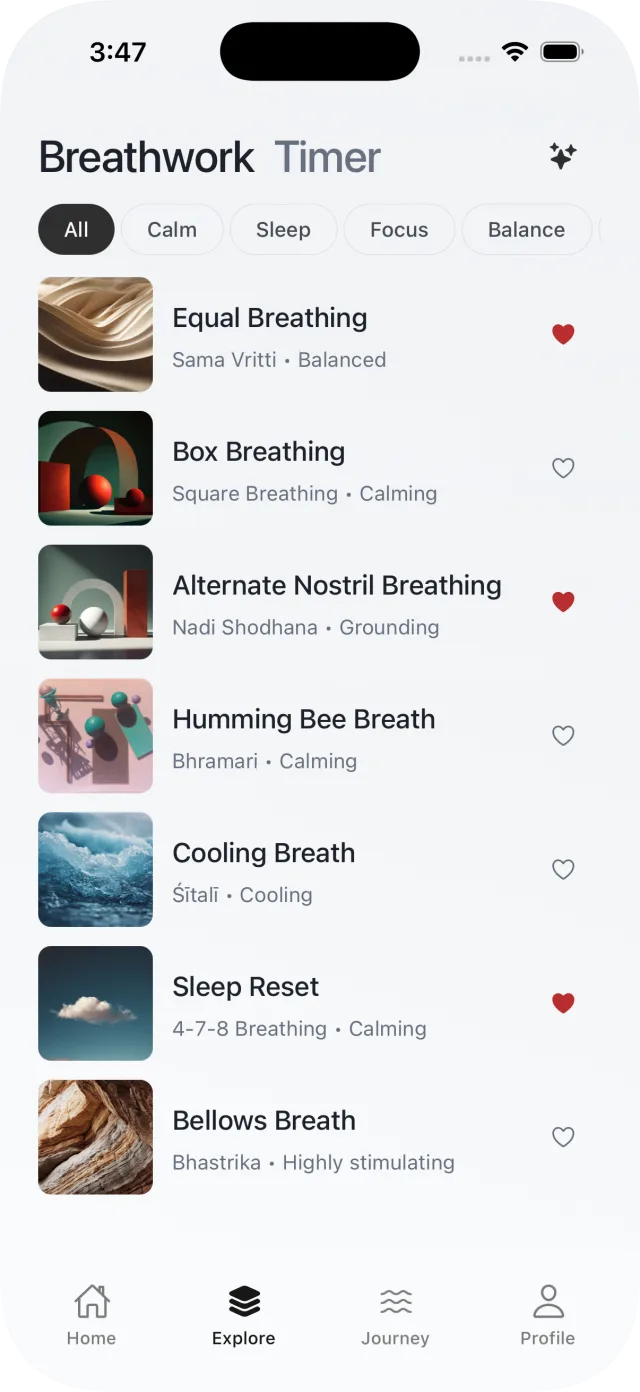
Prana's published listing includes Equal Breathing, Box Breathing, Alternate Nostril Breathing, Ocean Breath, and 4-7-8 Breathing. You can adjust session length, pace, voice, and soundscape on iPhone. This may suit someone who wants to return to a named technique without building a whole practice from scratch.
If you want to practice from your wrist, Prana's Watch app can start selected breathing patterns and meditation timers. The iPhone and Watch experiences have different controls and technique coverage; see the Watch feature guide before choosing for a particular exercise.
Optional Apple Health logging records completed practice as Mindful Minutes. Heart-rate context is optional too; it is not a measure of how well you practiced. For a wearable-focused comparison, read our Apple Watch breathwork guide.
How to evaluate an app before paying
Try one familiar or introductory session with each shortlisted app. A short comparison tells you more about the voice, pacing, and controls than a long feature list.
- Find the technique you want and check whether the instructions explain it clearly.
- Check whether the pace and session length are comfortable and easy to adjust.
- Try starting the session on the device you actually plan to use, especially if Watch access matters.
- Compare the current free access, paid features, renewal terms, and cancellation path in your region before subscribing.
If cost is your main constraint, use our free breathwork app comparison to narrow the options first.
FAQ
What is the best pranayama app for beginners?
Start by comparing Prana and Yogi Breath for named techniques and guidance. Choose an introductory exercise with clear instructions and comfortable pacing. If you already learned a breathing pattern from a teacher, a custom timer such as iBreathe or Paced Breathing may be enough.
Which app is best if I want a simple breathing timer?
Breathing Zone, iBreathe, Breathe+, Breath Ball, Paced Breathing, and The Breathing App are timer-first options to compare. Review whether each supports your preferred breathing ratio and device before choosing.
Should I choose a dedicated pranayama app or a broader meditation app?
Choose a dedicated app if the breath itself is your main practice. Choose a broader platform only if you also want its sleep, meditation, movement, or mental-wellness features.
Can I start pranayama practice from an Apple Watch?
Prana supports standalone Watch practice for selected breathing patterns and meditation timers, and Breathing Zone documents a dedicated Watch experience. Confirm the exercise and controls you need. Apple Health logging alone does not establish that an app can start sessions from your wrist.
Do I need a subscription for a useful breathing app?
Not necessarily. A subscription can make sense for a large class or wellness library, while a timer-first tool may be enough for a familiar daily practice. Check each app's current free features, trial terms, and price before subscribing.
Try a guided pranayama practice with Prana
If named techniques and adjustable sessions fit your routine, explore Prana on iPhone. You can also start selected practices from Apple Watch.
Download Prana